Music collaboration for bands: organize and finish songs
A practical band collaboration system for ownership, versions, focused feedback, decisions, and handoffs from writing to production.
Collaboration fails less often because musicians lack ideas than because the band cannot see the same state of the song. One person is editing yesterday’s lyric, another is commenting on the wrong bounce, and a third believes a decision was final because it appeared in chat.
The remedy is not more meetings. It is a shared operating model for the song.
Define the current state in one sentence
Every active song needs a short status statement:
Current reference: 29 August chorus arrangement. Open decision: final lyric line. Next owner: Maya, due before Thursday rehearsal.
This sentence forces the band to distinguish an approved reference from an experiment.
Give each song five visible elements
1. Current reference
One audio file is the version everyone should hear first. Earlier versions may remain available, but they cannot look equally current.
2. Current lyric or chart
Do not paste competing drafts into chat. Keep one active document and record branches as versions when they represent a genuine alternative.
3. Decision log
Record decisions that would otherwise be reopened: key, tempo range, arrangement form, selected chorus, or rejected section. Include enough reason to understand the choice later.
4. Open questions
Questions are easier to answer than vague requests for “thoughts.” Examples:
- Does the verse need one more concrete image?
- Which of the two pre-chorus endings creates more lift?
- Is the bass fill masking the vocal pickup at 1:18?
5. Next action and owner
A group task without an owner is a wish. One person owns the next move, even when several people will contribute.
Separate four kinds of feedback
Mixing these in one conversation creates conflict:
- Description: “The second verse has more syllables than the first.”
- Reaction: “The final chorus feels less urgent.”
- Diagnosis: “The harmony may be reducing contrast.”
- Proposal: “Try holding the dominant for one extra bar.”
Label the level. A reaction can be valid even when the diagnosis is wrong. A proposal is an option, not an instruction.
For a detailed feedback method, see how to give music feedback in a band.
Run an asynchronous review before the rehearsal
Use rehearsal for decisions that require playing together, not for discovering which file is current.
Before the session:
- upload the reference version;
- write no more than three open questions;
- set a response deadline;
- ask comments to refer to timestamps or sections;
- summarise the decision before the rehearsal.
During rehearsal, test the unresolved alternatives. Afterward, update the project before everyone leaves.
Prevent the organiser bottleneck
The person who creates the project should not become the only person capable of updating it. Assign rotating or role-based responsibilities:
- writer updates the lyric;
- producer uploads the reference bounce;
- rehearsal lead records arrangement decisions;
- each member owns their next action.
Shared access must still use permissions. “Everyone can do everything” is not resilience if one accidental deletion or ambiguous file can disrupt the group.
Use tools according to their job
- Chat: immediate coordination.
- Song workspace: current state, lyrics, versions, feedback, decisions.
- DAW: recording and production.
- Calendar/operations tool: rehearsals, gigs, availability.
- Review platform: formal external feedback when needed.
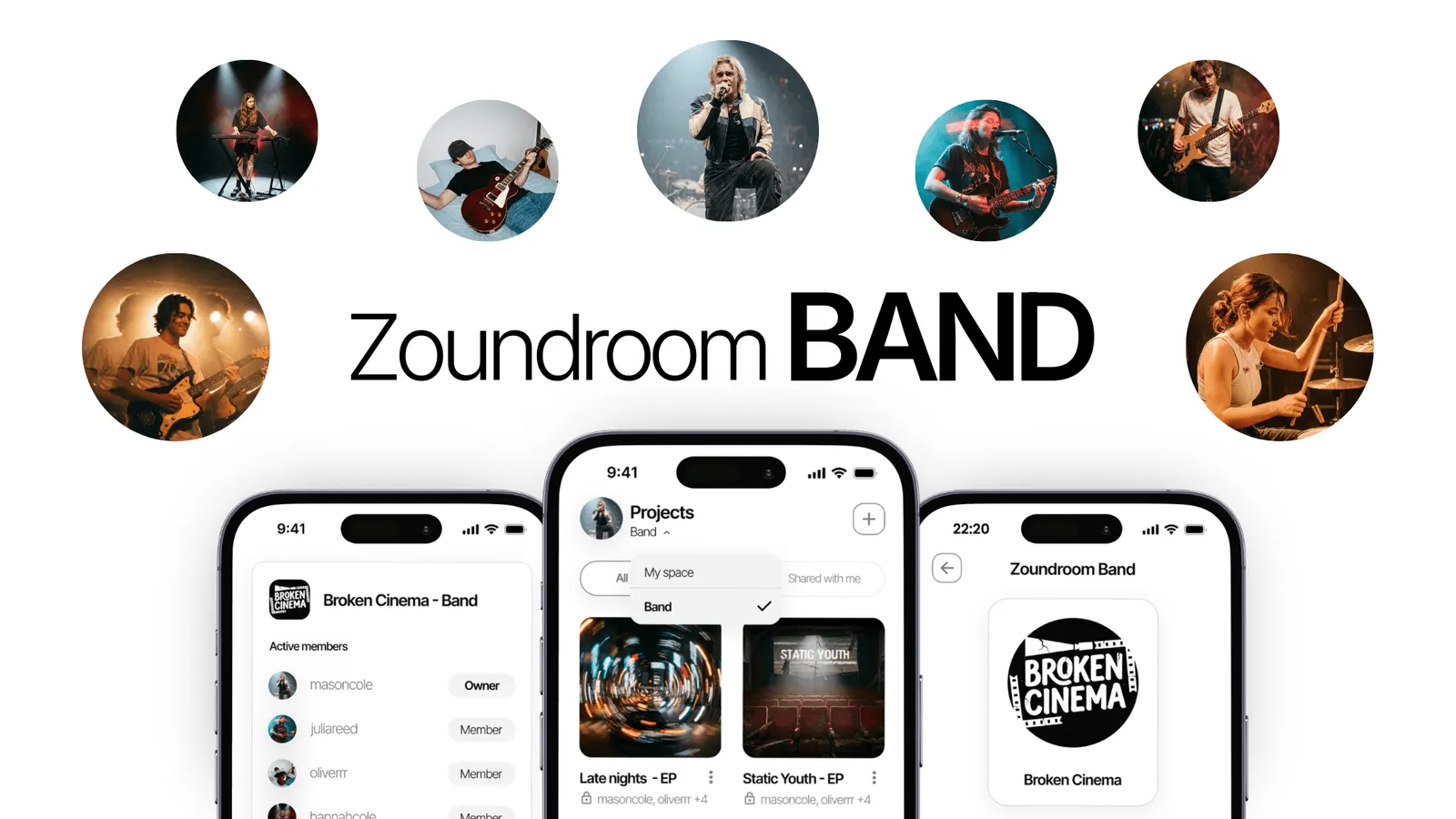
Zoundroom can serve as the song workspace. Its official collaboration pages describe shared projects, role-based access, audio with timestamped comments, and recordings, lyrics, notes, and files in one place. The Band Plan supports up to seven members. It does not replace the band’s DAW or booking calendar.
Definition of done for a song stage
Before moving from writing to demo, or demo to production, agree a gate. For example:
- structure can be performed from start to finish;
- current lyric is marked;
- tempo and key are recorded;
- reference demo is named;
- unresolved decisions are explicit;
- next-stage owner accepts the handoff.
A gate does not make art bureaucratic. It prevents the next stage from solving a different version of the song.
The weekly band review
Ten minutes is enough:
- archive stale experiments;
- confirm the current reference for each active song;
- close decisions that are no longer open;
- assign one next action per song;
- remove links or files that point to obsolete sources.
The goal is not to maximise activity. It is to reduce the distance between an idea and a version the whole band understands.