Organize music in progress by song projects, not files
Turn recordings, lyrics, versions, and decisions into one resumable project per song. Use this practical method without rebuilding your whole archive first.
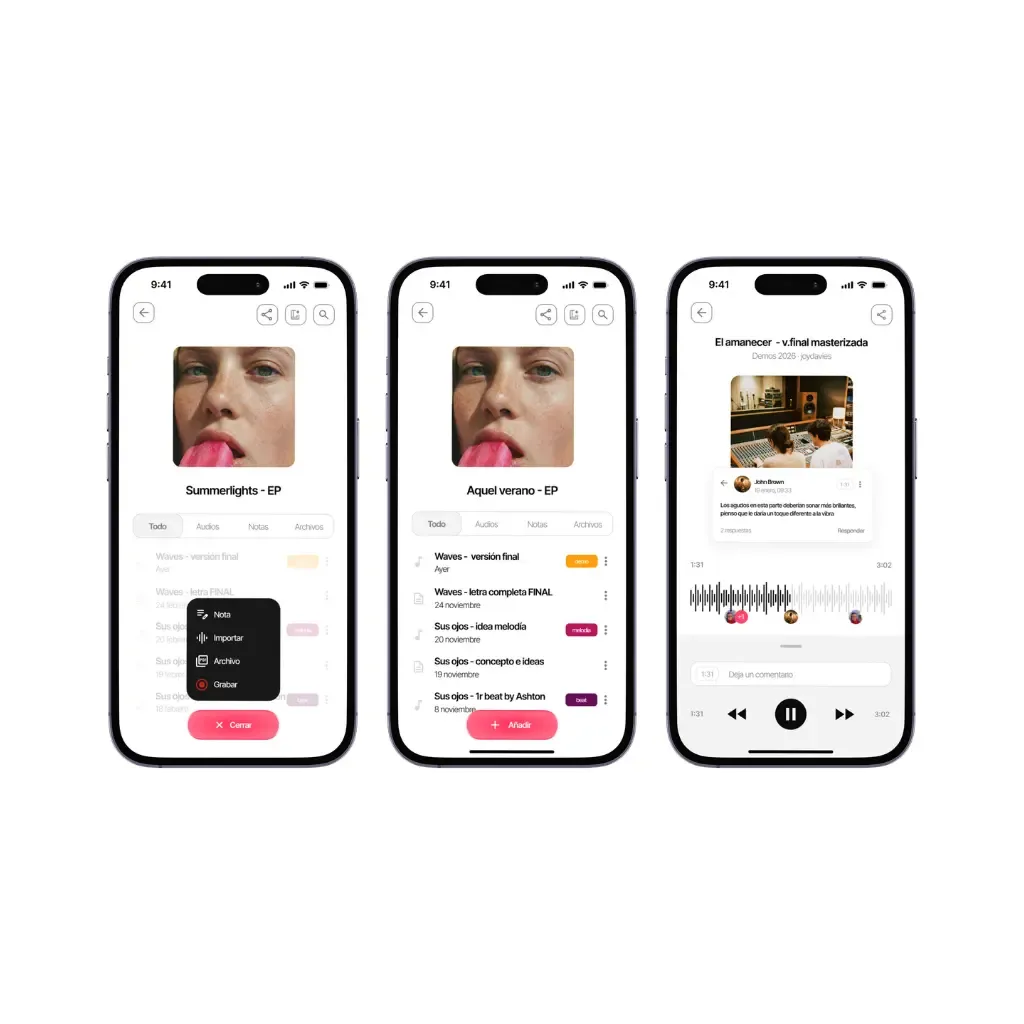
A folder of audio files can store music without showing the state of a song. It does not tell you which recording is current, which lyric belongs to it, what feedback was accepted, or what should happen next.
To organise music in progress, use the song—not the file type—as the main unit.
This article explains the project method. For the wider five-step operating system, read how to organise your music projects. For tool selection, use software to organise music.
The difference between a file and a project
A file is one artifact: an audio export, lyric, image, chart, or session. A project represents the current creative state and the relationships between those artifacts.
A useful song project answers:
- What is this song called now?
- What should I listen to first?
- Which words or notes are active?
- What changed in the latest version?
- What question is open?
- What is the next action?
If those answers live only in your memory, the files are stored but the song is not organised.
Build the minimum project record
Each active song needs six elements.
1. Working title
Use any distinctive phrase. Avoid a long series of projects called “new idea,” “track 3,” or today’s date alone.
2. Current audio reference
Mark one recording as the starting point for the next session. Earlier milestones remain available but should not compete visually with it.
3. Active lyric or musical notes
Keep the text, chords, section map, or production brief that applies to the current reference. When two alternatives remain open, label the decision explicitly.
4. Status
Use a small vocabulary such as:
- captured;
- writing;
- arranging;
- demo ready;
- production;
- paused;
- complete.
Statuses should describe what work is possible next, not how good the song feels.
5. Next action
Write one physical, finishable action: “record the new chorus melody,” not “improve chorus.”
6. Decision history
Keep only decisions that prevent future confusion: key change accepted, bridge removed, earlier tempo restored, lyric branch retained for another version.
Organise versions by meaning
Version numbers provide order but not context. Combine a date or sequence with the important change:
2026-08-29 — shorter intro
A version becomes the current reference when it has been reviewed and selected, not simply because it was exported last.
Preserve milestones when they represent a different structure, lyric direction, or arrangement. Routine autosaves belong to the production tool, not the high-level song history.
Connect captures to projects during review
Fast capture and careful organisation should be separate actions.
When an idea arrives:
- record it immediately;
- add a minimal label;
- return during a scheduled review;
- attach it to an existing song, create a project, archive it with context, or discard it.
Do not demand a perfect filing decision in the moment of inspiration. Do not let “inbox” become a permanent destination either.
Migrate without reorganising your whole life
Start with songs that will change soon.
Pass 1: choose active projects
Select a limited group—whatever you can genuinely work on during the next few weeks.
Pass 2: identify current references
For each song, choose the recording and lyric from which work should continue. Do not resolve every historical discrepancy.
Pass 3: add next actions
A project with no next action is an archive entry. That may be correct; mark it deliberately.
Pass 4: create a legacy archive
Keep old folders intact in a dated archive. Add a short index if needed. Migrate deeper history only when a song returns to active work.
Use links instead of duplication
When a DAW session, cloud folder, or reference playlist must remain elsewhere, link it from the song project and explain its role. Copying the same artifact into several systems creates divergent versions.
One system should represent the durable song state even when specialised work happens in other tools.
Where Zoundroom fits
Zoundroom is designed around song projects that can contain recordings or imported files, notes or lyrics, and collaboration context. It is not a DAW, so detailed production remains in the appropriate session. The project layer tells you which export matters and why.
Weekly maintenance in ten minutes
Review:
- captures still in the inbox;
- projects without a current reference;
- projects with more than one apparent active lyric;
- statuses that no longer match reality;
- next actions that are vague or have no owner;
- completed songs still consuming active attention.
A project system succeeds when returning to a song is easier than avoiding it.