How to record a clear music demo with your phone
Use your phone to capture a useful song demo: place it well, control the room, set a purpose, make a complete pass, and store the result with context.
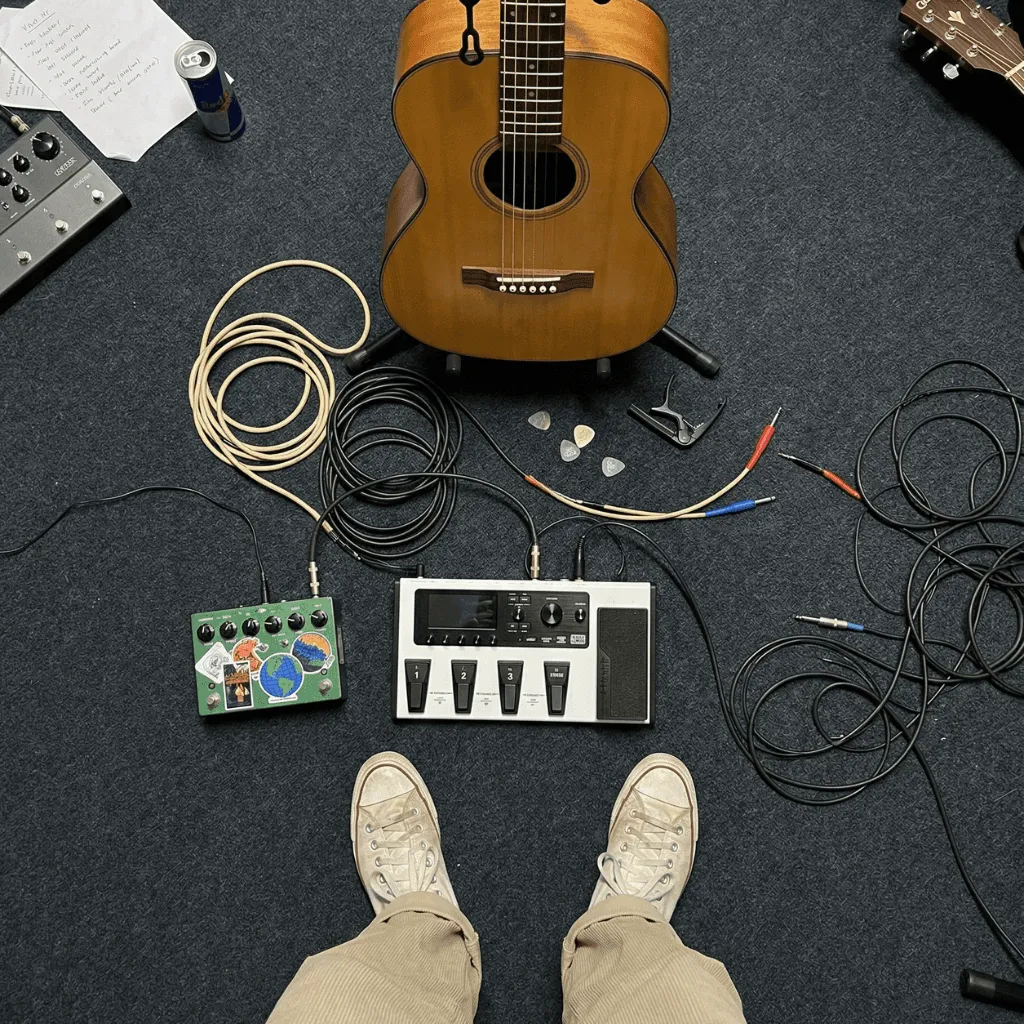
Your phone can make a useful demo when the goal is to preserve or evaluate a song. It will not replace a controlled multitrack recording in every situation, but it removes the setup that often stands between an idea and a recording.
The standard is not studio quality. It is clarity sufficient for the next decision.
Before you press record
Name the purpose
Decide whether the recording is for memory, writing, rehearsal, feedback, or presentation. A memo for yourself can tolerate more imbalance than a demo sent to a producer.
Prepare the song context
Write a working title and the question you want the recording to answer. Open the lyric or chord reference before starting so the take does not become another anonymous file.
Silence preventable noise
Close doors and windows when appropriate, stop fans or appliances you can safely stop, silence notifications, and place the phone on a stable surface. Use airplane mode only when doing so will not interfere with a safety or communication need.
Place the phone by listening, not guessing
Phone microphones and processing differ by model. Make a short test and listen through headphones.
Voice plus acoustic instrument
Start at roughly arm’s length, with the phone between the main sound sources rather than directly in front of the loudest one. If the instrument overwhelms the voice, raise the phone or aim it more toward the singer. If the voice dominates, move toward the instrument or turn it slightly.
Full band rehearsal
Place the phone where the room sounds balanced, not beside one amplifier. Elevate it above waist height, keep it away from walls and corners, and make a loud-section test. If drums overload the recording, increase distance before relying on processing.
Electronic source or speaker
A direct export from the app or DAW is better when available. Recording a speaker adds the room and phone processing, which may be useful as a quick reference but should be labelled as such.
Record with headroom
Play the loudest section during the test. Some recorder apps show level meters; others manage gain automatically. In both cases, audible distortion is a signal to increase distance or reduce source level.
Do not hold the phone during the take unless movement is part of the test. Handling noise and changing distance make comparison harder.
Make a complete pass
Record the song from start to finish before chasing details. A complete pass reveals whether sections connect, whether the lyric survives at tempo, and whether the energy develops.
When the purpose is songwriting, keep a take that communicates the song even if it contains a minor performance mistake. Repeat when the mistake hides the decision, not merely because the performance was imperfect.
Add a spoken slate when context may be lost
At the beginning or end, say:
- song title;
- date;
- version change;
- question to review.
For example: “Northern Lights, 29 August, shorter second verse; check whether the last chorus arrives soon enough.”
The slate makes the file identifiable even when its filename changes during sharing.
Review on more than the phone speaker
Listen once with headphones. Check:
- Can you understand the lead melody and lyric?
- Does any source distort?
- Are section boundaries obvious?
- Can the intended listener answer the stated question?
Do not use the phone demo to make detailed mix decisions it cannot represent reliably.
Name, export, and keep context
Rename the recording immediately. Include working title and change, not only date. When sharing through Voice Memos or another recorder, confirm the recipient can open the chosen format and that the correct version was sent.
Place the demo in the song project with the current lyric or notes, and mark whether it is now the reference. Keep significant older versions, but avoid making all of them look current.
When the phone is not enough
Move to another setup when you need:
- separate tracks for arrangement decisions;
- reliable monitoring while overdubbing;
- multiple microphone inputs;
- editing or processing that affects the decision;
- a presentation standard your phone recording cannot communicate.
That is a workflow decision, not a judgement on the song.
Where Zoundroom fits
Zoundroom can receive recordings or imported files and keep them with the song’s lyrics, notes, and project context. Record with the phone tool that gives you the cleanest capture, then organise the result around the song instead of leaving it in a chronological recorder list.
For a fuller home setup, see how to record a demo at home without expensive gear.
A phone demo succeeds when you can return to it, recognise the idea, and know what to do next.